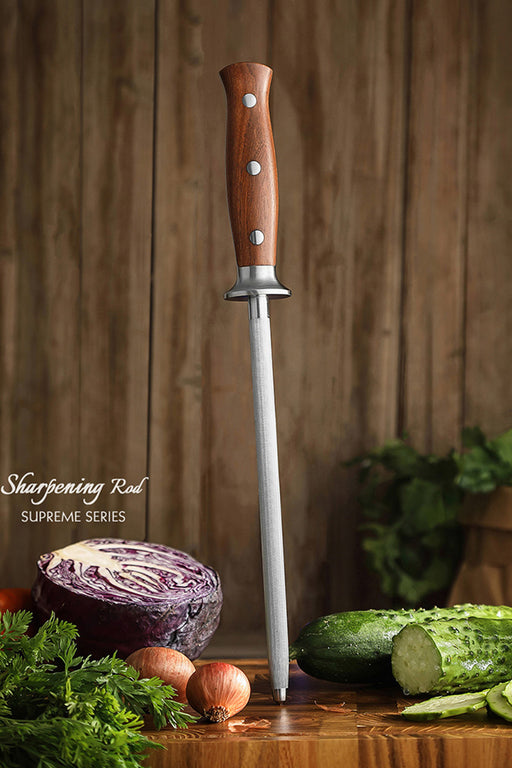
In the world of culinary arts, the sharpness of your knife can make a significant difference in your cooking experience. A well-honed blade ensures precise cuts, enhances safety, and boosts efficiency in the kitchen. One of the most effective tools to maintain the sharpness of knives is the knife sharpening rod. While many may consider it a simple tool, its impact on maintaining a razor-sharp blade is profound. Understanding how to utilize a sharpening rod effectively can transform your kitchen skills, making every slice and chop more efficient and enjoyable.
Understanding the Knife Sharpening Rod
The knife sharpening rod, often referred to as a honing rod, is designed to realign the microscopic teeth on the blade’s edge that can become bent or misaligned during regular use. Unlike a sharpening stone, which removes metal to create a new edge, the honing rod maintains the existing edge by straightening it.
Materials and Types
- Steel Rods: The most traditional type, often made of high-carbon steel. They are durable and provide excellent results.
- Ceramic Rods: Offer a finer grit compared to steel rods, making them ideal for honing delicate blades.
- Diamond Rods: Embedded with diamond dust, these rods can sharpen and hone, making them versatile for various knife types.
Each material has its strengths, and choosing the right one depends on the type of knives in use and personal preference. Find out more about this approach.
Techniques for Using a Sharpening Rod
To achieve the best results with a knife sharpening rod, it’s essential to employ the correct technique. Follow these steps to ensure optimal performance:
- Hold the Rod Vertically: Place the tip of the rod on a stable surface, ensuring it’s secure and won’t slip during use.
- Angle the Knife Correctly: Hold the knife at a 15-20 degree angle to the rod. This angle is crucial for maintaining the blade’s edge.
- Stroke the Blade: Gently draw the blade down the rod, starting at the heel and moving towards the tip. Alternate sides with each stroke to ensure even honing.
- Consistent Pressure: Apply light, consistent pressure throughout the process. Avoid pressing too hard, as this can damage the blade.
For more detailed guidance, explore advanced guides and tips.
Benefits of Regular Honing
Regular use of a knife sharpening rod offers numerous advantages:
- Enhanced Safety: A sharp knife is less likely to slip, reducing the risk of accidents.
- Improved Efficiency: Sharp blades require less effort to cut, making preparation tasks quicker and more straightforward.
- Prolonged Knife Life: Regular honing maintains the blade’s edge, reducing the frequency of sharpening and extending the knife’s lifespan.
Regular maintenance is key to preserving the quality of kitchen knives. Learn about our tailored solutions.
Choosing the Right Sharpening Rod
Selecting the appropriate sharpening rod depends on several factors:
- Blade Type: Consider the material and design of your knives. Some rods are better suited for certain blade types.
- Frequency of Use: For frequent use, a more durable and versatile rod, like a diamond rod, may be preferable.
- Skill Level: Beginners may find ceramic rods easier to handle due to their forgiving nature.
Understanding these factors can guide users in making informed decisions. Discover expert strategies here.
Conclusion
Incorporating a knife sharpening rod into the kitchen routine is an investment in both safety and efficiency. By choosing the right tool and mastering the technique, chefs of all levels can maintain their blades with ease. This simple yet powerful tool ensures that every meal preparation is as seamless and enjoyable as possible. Explore advanced guides and tips to elevate the culinary experience.