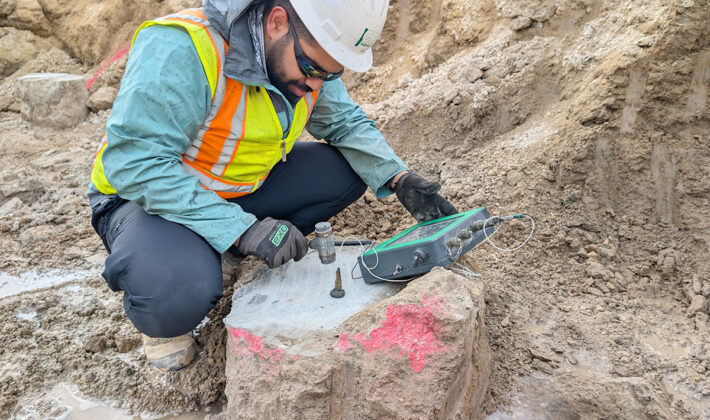
In the realm of civil engineering and construction, ensuring the integrity and safety of piles is paramount. Pile integrity tests (PIT) play a crucial role in assessing the condition of concrete piles after installation. Among various testing methods, Low Strain Testing and Sonic Echo Testing stand out for their effectiveness and efficiency. These methods provide insights into the structural health of piles, guiding engineers in making informed decisions about the stability and longevity of construction projects.
Understanding Pile Integrity Testing
What is Pile Integrity Testing?
Pile Integrity Testing is a non-destructive testing method used to evaluate the condition of piles. It helps detect anomalies such as cracks, necking, bulging, or voids. The test is typically conducted after pile installation and before the commencement of superstructure construction.
Key Objectives of PIT
- Assess the length and continuity of piles.
- Identify any structural defects or discontinuities.
- Ensure compliance with design specifications and standards.
Low Strain Testing: An Overview
Low Strain Testing, also referred to as Impact Echo or Sonic Echo Testing, involves applying a small impact to the pile head and analyzing the reflected stress waves. This method is favored for its simplicity and effectiveness in detecting major anomalies in piles.
Benefits of Low Strain Testing
- Non-invasive and cost-effective.
- Quick execution and real-time results.
- Ideal for preliminary assessments and quality control.
For those seeking to refine their understanding of Low Strain Testing, discover expert strategies here.
Sonic Echo Testing: A Closer Look
Sonic Echo Testing shares similarities with Low Strain Testing but is employed in slightly different contexts. This method uses sound wave propagation to assess the pile’s integrity, making it particularly useful for longer piles where traditional methods might fall short.
Advantages of Sonic Echo Testing
- Effective in evaluating deeper piles.
- Provides comprehensive data for detailed analysis.
- Useful for complex structures requiring precise evaluation.
Those interested in a deeper dive into Sonic Echo Testing can learn about our tailored solutions.
Choosing Between Low Strain and Sonic Echo Testing
Deciding whether to use Low Strain or Sonic Echo Testing depends on specific project requirements such as pile depth, expected anomalies, and budget considerations. Both methods have their unique strengths and applications.
Factors to Consider
- Pile Depth: Sonic Echo Testing is more suitable for deeper piles.
- Type of Anomalies: Choose based on the specific issues anticipated in the pile structure.
- Budget and Time Constraints: Low Strain Testing is generally more cost-effective and quicker to perform.
For more guidance on selecting the appropriate testing method, explore advanced guides and tips.
Future Trends in Pile Integrity Testing
The field of Pile Integrity Testing is constantly evolving with advancements in technology and methodology. Future trends point towards more integrated and automated solutions, enhancing accuracy and efficiency.
Emerging Innovations
- Utilization of AI and machine learning for data analysis.
- Integration of digital reporting tools for streamlined documentation.
- Development of eco-friendly testing equipment.
To stay ahead in understanding these trends, find out more about this approach.
By leveraging the strengths of both Low Strain and Sonic Echo Testing, engineers can ensure robust pile integrity assessments, fostering safer and more reliable construction practices. Whether addressing immediate project needs or anticipating future challenges, these testing methods form the backbone of modern geotechnical engineering.